Saturday, April 2, 2011

Page 296: "the still, sad music of humanity."

From page 296 of the book:  "Yes, you've made me very sad," Revenant repeated. "You know, I see the tears of Christ each time that I look into the soul of a desperate man. When I hear confessions I don't just tally the sins and hand out penance like Meroux distributes the meat across the counter, 'hearing oftentimes the still, sad music of humanity,'" the priest replied, chanting a quote from Wordsworth.


[Following is an excerpt from...
COMPOSED A FEW MILES ABOVE TINTERN ABBEY, ON REVISITING THE BANKS OF THE WYE DURING A TOUR. JULY 13, 1798.  (William Wordsworth)]

If this
      Be but a vain belief, yet, oh! how oft--                       
      In darkness and amid the many shapes
      Of joyless daylight; when the fretful stir
      Unprofitable, and the fever of the world,
      Have hung upon the beatings of my heart--
      How oft, in spirit, have I turned to thee,
      O sylvan Wye! thou wanderer thro' the woods,
      How often has my spirit turned to thee!
        And now, with gleams of half-extinguished thought,
      With many recognitions dim and faint,
      And somewhat of a sad perplexity,                              
      The picture of the mind revives again:
      While here I stand, not only with the sense
      Of present pleasure, but with pleasing thoughts
      That in this moment there is life and food
      For future years. And so I dare to hope,
      Though changed, no doubt, from what I was when first
      I came among these hills; when like a roe
      I bounded o'er the mountains, by the sides
      Of the deep rivers, and the lonely streams,
      Wherever nature led: more like a man                           
      Flying from something that he dreads, than one
      Who sought the thing he loved. For nature then
      (The coarser pleasures of my boyish days,
      And their glad animal movements all gone by)
      To me was all in all.--I cannot paint
      What then I was. The sounding cataract
      Haunted me like a passion: the tall rock,
      The mountain, and the deep and gloomy wood,
      Their colours and their forms, were then to me
      An appetite; a feeling and a love,                             
      That had no need of a remoter charm,
      By thought supplied, nor any interest
      Unborrowed from the eye.--That time is past,
      And all its aching joys are now no more,
      And all its dizzy raptures. Not for this
      Faint I, nor mourn nor murmur, other gifts
      Have followed; for such loss, I would believe,
      Abundant recompence. For I have learned
      To look on nature, not as in the hour
      Of thoughtless youth; but hearing oftentimes                   
      The still, sad music of humanity,      Nor harsh nor grating, though of ample power
      To chasten and subdue. And I have felt
      A presence that disturbs me with the joy
      Of elevated thoughts; a sense sublime
      Of something far more deeply interfused,
      Whose dwelling is the light of setting suns,
      And the round ocean and the living air,
      And the blue sky, and in the mind of man;
      A motion and a spirit, that impels                            
      All thinking things, all objects of all thought,
      And rolls through all things.


Page 348 "Revenant brought us to a large boulder about the size of a small chair."

From page 348 of the book:  In one lane of trees, Revenant brought us to a large boulder about the size of a small chair.
 "We have to move this," he said.
 "What?" Ebert exclaimed, coming up along side of him.
 "We have to move it; exactly one foot."
 "Are you crazy?" said Ebert.
 "No, I'm not crazy.  We're five men.  We can do it.”
 I looked at Ebert, Revenant, and Shanzenbach, old and intoxicated.  If we tried to move that rock they'd suffer hernias and collapse.  We'd have three dead men on our hands.
 "Let Owen and me do it," I said.
 "It's a heavy one," the priest said.  "Faites attention!"
 Because the rock was merely resting on the top soil and dried grass, Owen and I, hands and shoulders to the hard, settled mass, had little difficulty sliding it over a foot or more.  Moving the rock revealed an 18-inch diameter hole that penetrated down deep into the earth.


[From Mark 16:3  "They were saying to one another, "Who will roll this stone away for us from the door of the tomb?"]

 
 Furthermore, below is a YouTube connection to the Leon Russell song, "Roll Away the Stone"


Page 232 "My comrades and I destroyed a little place outside of Biskra."

A market in Biskra


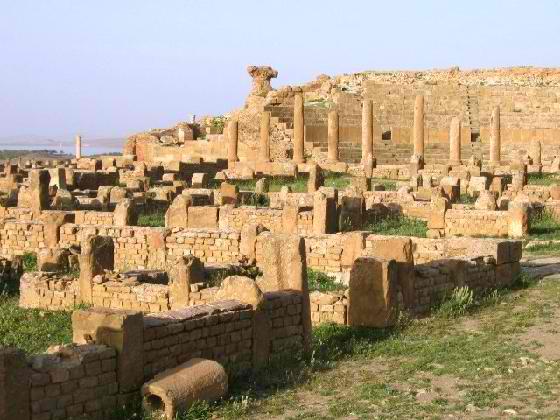
Roman ruins outside Biskra


From page 232 of the book:  "...My comrades and I destroyed a little place outside of Biskra. It was supposed to be a French army intelligence post. It wasn't. They were all civilians. We killed most of them. They had nothing to do with the war, the poor saps. Whole families were burned alive in their houses. Just shot up and burned out. It was a mess. Your country thought My Lai was a disaster." He shook his head and at last lit his half-cigar. "Americans were such innocents. We left and drove south to Tozeur and Touggourt. When I came back to that town, assigned to a reconnaissance unit, I realized what had been done. These were French people. They were Algerians. They were my brothers, Owen, I murdered my brothers."


Mountains just north of Biskra

Sunday, March 20, 2011

Page 292 "..What Revenant had remembered was a portion of A Glastonbury Romance"

From page 292 of the book:  "...What Revenant had remembered was a portion of A Glastonbury Romance, from which I had described a short scene toward the end, but the essence of which had occurred all throughout that great novel. It was a scene where an evil momentary wish of one character had left the Corporeal and entered the Ethereal. Then it lingered above the heads of the other characters and, given the nature of John Powys' mythology or pantheology, the thought had enjoyed a life of its own. It had, by the end of the scene, transmuted itself into a physical act which had wreaked havoc on the characters in a brutal crime. When I told Revenant of the book he was interested in hearing more...."


Various covers for A Glastonbury Romance--


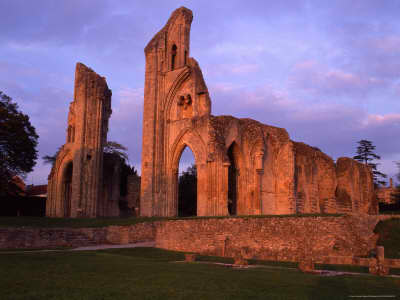
 Views of the Glastonbury countryside, the tower (Tor), and Glastonbury Abbey (the ruins).


The Tor


Another view of the Tor


A portion of Glastonbury Abbey


Glastonbury Abbey


On the grounds of Glastonbury Abbey


Page 288 "Yes, there was anguish, Oh Lord, the anguish."

From page 288 of the book:  "What was it like?" Ebert asked out of the blue.
"What?" said Revenant.
"You know," Ebert urged.
"You mean hearing his confession?" replied the priest.
"Yes."
"It was like listening to music," Revenant said. "It was like listening to Haydn. I went a good distance with it."
"Anguish?" asked Ebert.
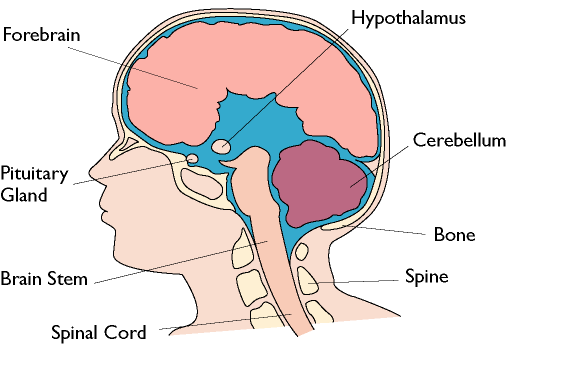
"Yes, there was anguish, Oh Lord, the anguish; it was like one of those string instruments rubbing against my...what gland was it you told me about last winter? The one in the brain, the size of a cherry, the one that makes me sweat when I'm hot and shiver when I'm cold?"
"The hypothalamus," answered Ebert.
"Yes, yes, the hypothalamus," echoed Revenant. "The wonderful hypothalamus. Yes, I remember now, it tells me when I'm hungry and converts nerves into hormones."


Some helpful links:


Page 280 "...I began to imitate well-known American movie personalities..."

From page 280 of the book:  "...To humor him, I began to imitate well-known American movie personalities, poor renditions they were but sufficient enough to keep an audience of ten drunkards laughing while liquor was purchased for me instead of by me. After my imitation of Jimmy Stewart in "The Philadelphia Story," Gerard insisted that I do Noel Coward, as he had, just the night before, watched "Sink the Bismarck" on television...."


You can't marry that guyyyyy.

The moon is also a goddess.


C.K. Dexter Haven you have unsuspected depth.

[Author's note:  Walter was thinking of Noel Coward's line "Shoot!" in the movie "In Which We Serve" not from "Sink the Bismarck" because as we all know, Noel Coward was not in "Sink the Bismarck"]


Noel Coward

Page 278 "...It was a late harvest."

From page 278 of the book:  "It was a late harvest," began Mme Mirès in French. "The Blessed Virgin sent us a thunderstorm in October and Botrytis cinerea the following week."
"The noble rot," Ebert nudged Owen.
"Then, we had more than enough warm air left over from summer," she continued. "Voila! The mold! We harvested at 29 degrees Brix, and cold fermented to nine and a half percent alcohol and 14% residual sugar."
"Parfait!"
"Jesus sipped," Owen said.*


Botrytis cinerea


Botrytis cinerea, the "noble rot"

[(*) Owen references here the shortest sentence in the Bible from John 11:35, "Jesus wept."]


Harvesting at 25.5 degrees Brix


cold fermented to 9.5% alcohol
[In the Botrytis infection known as "noble rot" (pourriture noble in French, or Edelfäule in German), the fungus removes water from the grapes, leaving behind a higher percent of solids, such as sugars, fruit acids and minerals. This results in a more intense, concentrated final product. The wine is often said to have an aroma of honeysuckle and a bitter finish on the palate.] (Courtesy of Wikipedia.)