Thursday, January 27, 2011

Page 138 "His father was a blue-jacket..."

Clockwise from top left: the 7.2 rocket; preparing rockets for launching on DDay; a row of rockets ready for fire (early prototype version). This was the "Woofus" rocket launcher; a converted PT boat into rocketboat; the lone sailor statue at the Navy Memorial in Washington, DC.
Photo of the rocket boat courtesy of Mike Virgintino and http://www.suite101.com/


Interesting note:  The statue of The Lone Sailor is constructed from pieces of copper sheeting, spikes, hammock hooks & other fragments from the post-revolutionary frigates USS Constitution and USS Constellation; from the USS Hartford (flagship of Admiral Farragut in the Civil War era), from the USS Maine, the USS Ranger, and from the USS Biloxi, as well as from USS Hancock the submarine USS Seawolf.

More:  Receiving little attention over the last 65 years, rocketboatmen were the first Navy crews in daylight to approach the Omaha and Utah beaches. They deployed 30 minutes before the first wave of infantry troops. Some left their flat bottom boats and fought head-to-head with the German machine gun nests, successfully neutralizing them. Many of those brave men took their war stories of that day with them to their graves.  One rocketboatman, Yogi Berra, beloved baseball star...got closer to the beach than the hitter is to the left field wall in Fenway Park. “Nobody knew about rocket boats. We were a secret mission as part of the invasion. We moved quick, shot rockets 300 yards from the shore, and didn’t have time to be scared.”
(Text copyright by Mike Virgintino.  Used by Permission.)


From page 138 of the book:  "...His father was a blue-jacket, in line for a petty officer rating when he'd operated what was described in 1944 as one of the "most secret of naval weapons," and which had played a key role in the blasting of German defenses along the French beaches of Normandy. They were large landing ships, redesigned from carrying tanks to providing rocket fire as primary bombardments began prior to the landing of Allied troops. The noise of those rockets, firing 60 times a minute and never ceasing for hours, had nearly driven him crazy. Hours on end that even plugs and heavy muffs over his ears couldn't dim the noise. His skin had absorbed the blasts as the missiles sped out of their cylinders, never ceasing, always louder and louder."

Page 142 "Next to it hung Mantegna's "Dead Christ"

Andrea Mantegna's "Dead Christ," c. 1500, tempera on canvas, 27' x 32"
An excellent example of foreshortening, a process of perspective used on the human figure.
It creates confrontation with the viewer and a psychological mood.


Caravaggio's "Conversion of St. Paul"
1600-1601; Oil on canvas
Cerasi Chapel, Santa Maria del Popola, Rome


From page 142 of the book:  "...Why didn't Owen tell Sylvester about what Thomas had intended to do at the outset of the plan? I'd looked to my print of Titian's "Man With a Glove," which hung in the center of the wall facing me. I'd bought it in front of the Museum of Modern Art one day while shopping with Sarah. That portrait had grabbed my attention like a hook; I was in love with the man's eyes. Next to it hung Mantegna's "Dead Christ," with its foreshortened perspective of the Savior's body: the feet were in the foreground, drawing my eye backward toward His head, as if I were watching an MRI being performed. To the right of the Titian hung Caravaggio's "Conversion of St. Paul,” the second one, with Paul lying on his back, limbs raised upward, facing his indifferent horse. I'd begun to refer to these objects within their and my own immediacy as consolation against my sometimes ungovernable states of mind: I'd known from way back, from deep inside my Connecticut backwoods, that I'd stepped on the perimeters of lunacy and needed a standard by which to measure myself."

Saturday, January 8, 2011

Page 131 "...Harry Haller's attic room in Steppenwolf"

Clockwise from top left: Max von Sydow as Harry Haller in the film "Steppenwolf";
the movie poster for "Steppenwolf"; the nobel-prize-winning novelist Hermann Hesse.


From page 131 of the book:  "...There were scattered sheaves of paper and a glass with the dried residue of inexpensive brandy or bourbon on the bot-tom. I thought of Harry Haller's attic room in Steppenwolf. Here was a retreat and a torture chamber in one."

Page 131 "...the books of the American Civil War like Joshua Chamberlain..."

From top to bottom, left to right:
Joshua Chamberlain, his book "The Passing of the Armies," Moxley Sorrel;
Sorrel's book "Recollections of a Confederate Staff Officer," James Longstreet,
Longstreet's book  "From Manassas to Appomattox"
Shelby Foote, his book "The Civil War"

From page 131 of the book:  "...Below the picture was Owen's desk: a small table clut-tered with books of the American Civil War like Joshua Cham-berlain's Passing of the Armies, Moxley Sorrel's Recollections, James Longstreet's From Manassas to Appomattox, Shelby Foote's trilogy, and a dozen other volumes lending nourishment to his infatuation with this subject."

Saturday, January 1, 2011

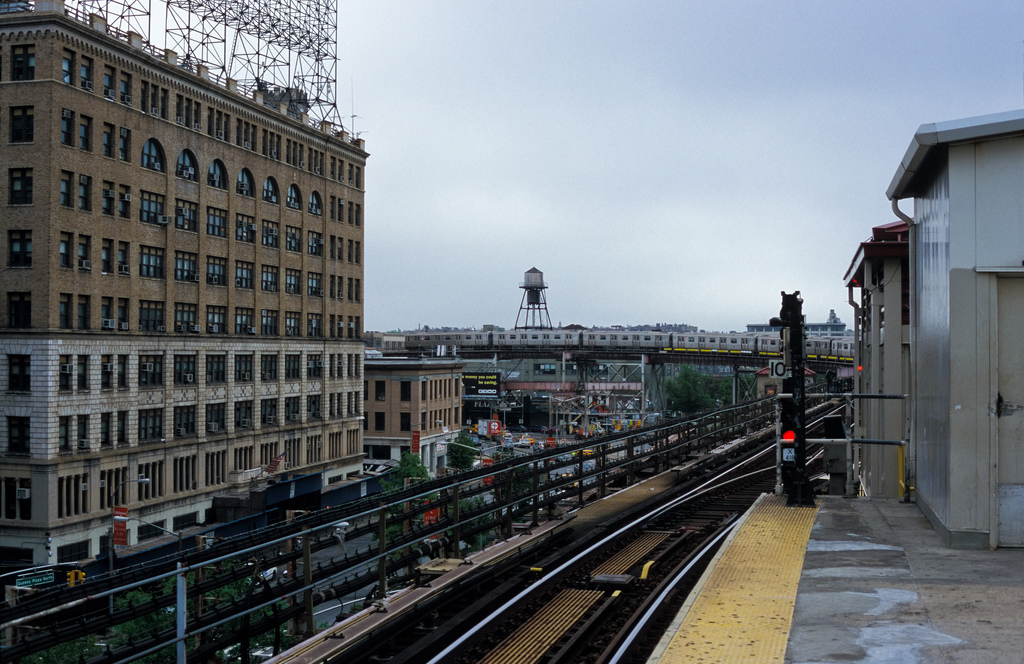
Page 8 "Owen had asked me to meet him in Long Island City..."

Kennedy

Welcome to Long Island City

Coming soon...

Spires and stacks

(This is the kind of day, back in May 1978, when Joe Savino
and I were walking along Northern Blvd., before we'd
stopped at a diner at 36th Street, the day we heard the
news from his cousin that their grandmother had died.
We were out of work at the time, and were searching
the neighborhood factories for possible jobs; miserable
responses, questions falling upon deaf ears.  At 6:30 a.m., we
knew that something terrible had happened.  When
we got back to the apartment in Jackson Heights,
Joseph Centrone telephoned and gave
 us the news about our beloved Benedetta Savino.)


N train


From page 8 of the book:  "...Owen had asked me to meet him in Long Island City, at a diner near 36th Street on Northern Boulevard.  Like I said, I wasn't in the habit of meeting people anywhere before sunrise, but his summons had had an affliction to it, an exhaustion.  With the blue shadows of dawn and the somnambulists dotting the streets of this warehouse district, I met Owen on a corner of the boulevard which was spotted with a pack of junked cars."


(The above photos of Long Island City are courtesy of npzo on Flickr.  Used with permision.)

Monday, December 27, 2010

Page 127 "Orwell scares me."


[George Orwell (1903-1950) was an English author and journalist. His work is marked by keen intelligence and wit, a profound awareness of social injustice, an intense, revolutionary opposition to totalitarianism, a passion for clarity in language and a belief in democratic socialism.  Orwell wrote fiction, polemical journalism, literary criticism and poetry and is best known for the dystopian novel Nineteen Eighty-Four and the satirical novella Animal Farm. They have together sold more copies than any two books by any other 20th-century author. His Homage to Catalonia, an account of his experiences as a volunteer on the Republican side during the Spanish Civil War, together with his numerous essays on politics, literature, language and culture, are widely acclaimed.  Orwell's influence on contemporary culture, popular and political, continues. Several of his neologisms, along with the term Orwellian, now a byword for any draconian or manipulative social phenomenon or concept inimical to a free society, have entered the vernacular.]


     From page 127 of the book:  "...Sarah was already charmed during the course of the evening. This latest compliment put her over the edge. She was completely in Ebert's hands. I still had reservations, since most of the conversation centered around our immediate past and what precipitated our emigration to France. Then there was talk of writing, of the many authors Ebert had met and known over the course of many decades. His fondest memory was that of knowing George Orwell for a brief period of time.
    "Orwell scares me," Owen admitted.
    "Well, Orwell saw the hard truth, and it wasn't a vision that he sentimentalized, I'll have you know."
    "That's why he scares me," said Owen.
    "That's why it's the hard truth," replied Ebert. "Later, during the Fifties, my own intimate circle in Paris denounced him as a mediocre talent, or a highbrow personality. What did they know?! The Left Bank. I liked him. I thought he was right. And I broke ranks with mes frères Parisiens. Snobs. I don't think you'd characterize any of his books as exciting."
    He puffed out some smoke and stared at the table.
    "Certainly Keep the Aspidistra Flying is sadly oppressive in its way."
He looked toward Sarah and me, as we weren't familiar with the novel, and then explained.
    "It was about a working-class fellow who wants to overcome his meager, penurious life. He wants to go beyond what everyone else will surely become; that is, a comfortable middle class life. Not a tragedy, but the truth."
    Ebert raised his eyebrows and looked at me.
    "Not a tragedy, but the truth," Owen echoed. "I'll drink to that.""


Page 124 "The Adventure of the Solitary Cyclist"


Arthur Conan Doyle


[Sir Arthur Conan Doyle (1859-1930) was a Scottish physician and writer, most noted for his stories about the detective Sherlock Holmes, which are generally considered a major innovation in the field of crime fiction, and for the adventures of Professor Challenger. He was a prolific writer whose other works include science fiction stories, historical novels, plays and romances, poetry, and nonfiction.]


     From page 124 of the book:  "...That day, the door to his room had been left ajar, as it would be during those baking, midwestern summer days, and I found him sitting at his desk reading. He was bathed in the bright sun streaming through venetian blinds, which in turn lit up the pale, cream-colored cinder block walls, providing a highlight of background against which he rested. His dark hair covered his ears, while his shoulders supported a grin which revealed two dimples. He hadn't the chance yet to furnish his room, so the emptiness of being newly arrived on campus was augmented by the room's hollow look. His book was opened to the first page of "The Adventure of the Solitary Cyclist," by Arthur Conan Doyle. How anyone could read in that late August heat was beyond me. How one could read Sherlock Holmes in that heat gave me pause for admiration."

                                                                                                                
The following link takes you to the full text of Conan Doyle's story: http://etext.virginia.edu/etcbin/toccer-new2?id=DoySoli.sgm&images=images/modeng&data=/texts/english/modeng/parsed&tag=public&part=all

This link takes you to IMDB's entry for the PBS TV series episode (this series is one of the best things ever to have appeared on television): http://www.imdb.com/title/tt0506456/